Ayushman Card Download 2026
Eligibility | Online Apply Status & PMJAY Hospitals
Ayushman Card gives your family free health coverage of ₹5 lakh every year. It keeps your savings safe during any medical emergency. So download your Card now and become a part of the world’s largest government health assurance program.
Last Updated: 6 June 2026 | Source: nha.gov.in
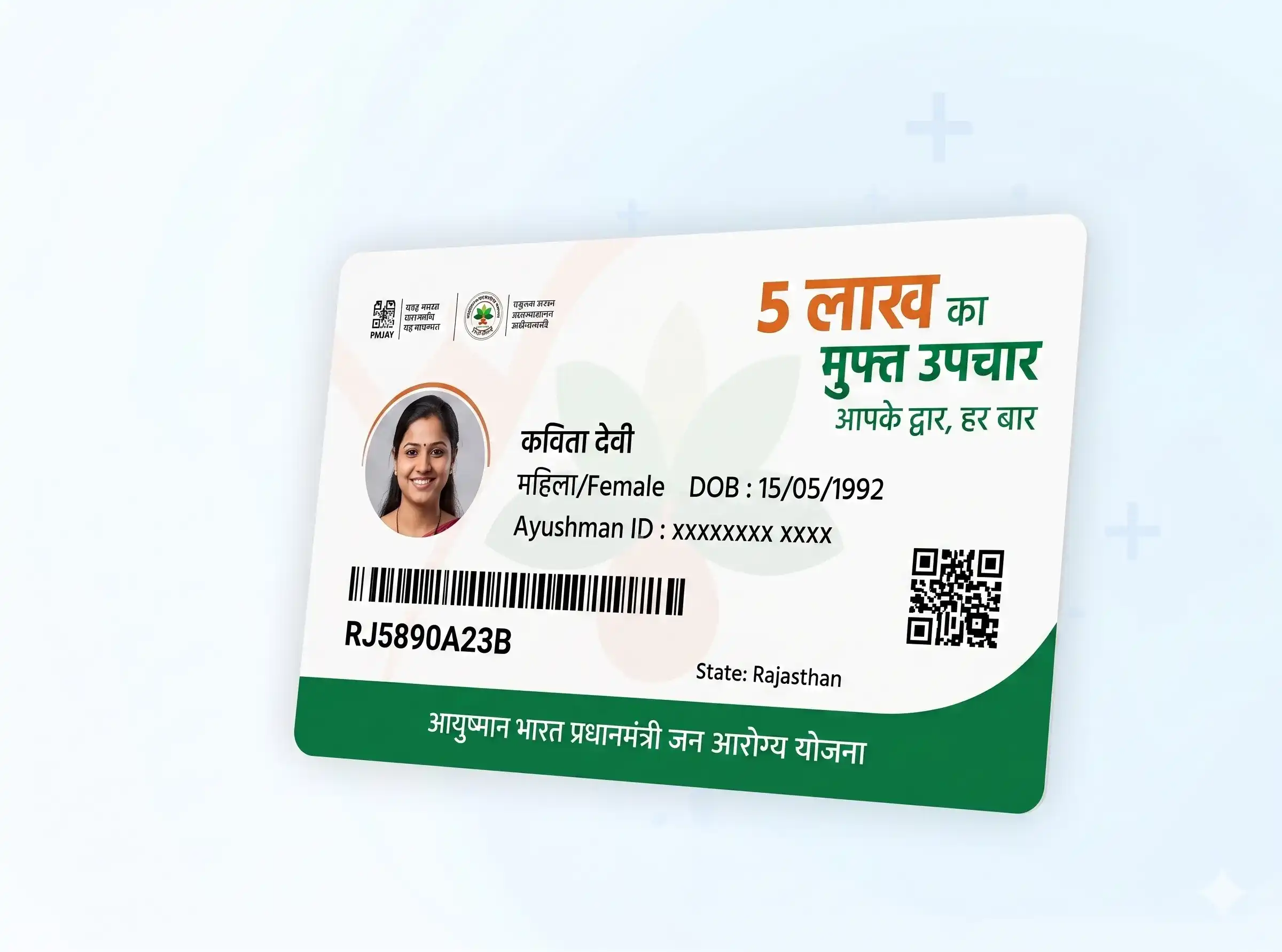
Ayushman Card download 2026: Step-by-step Guide!
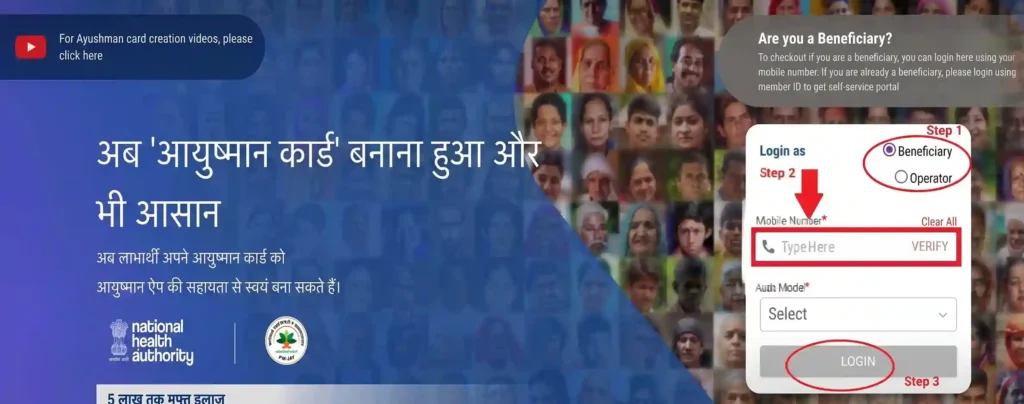
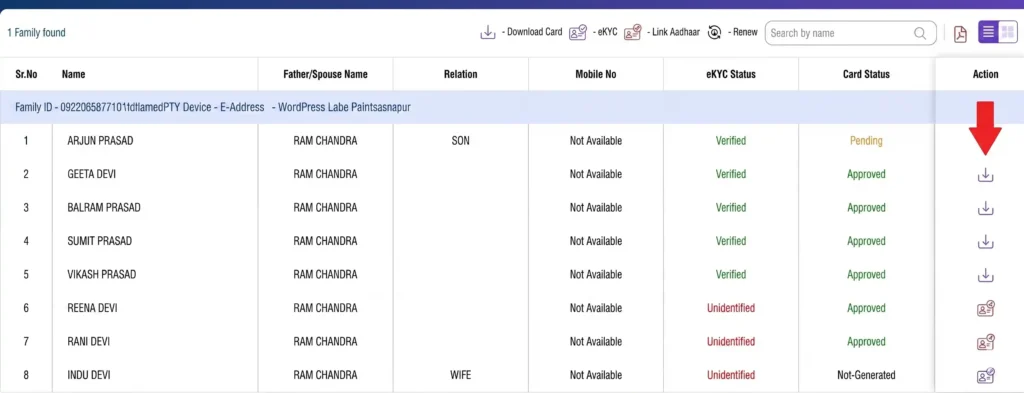
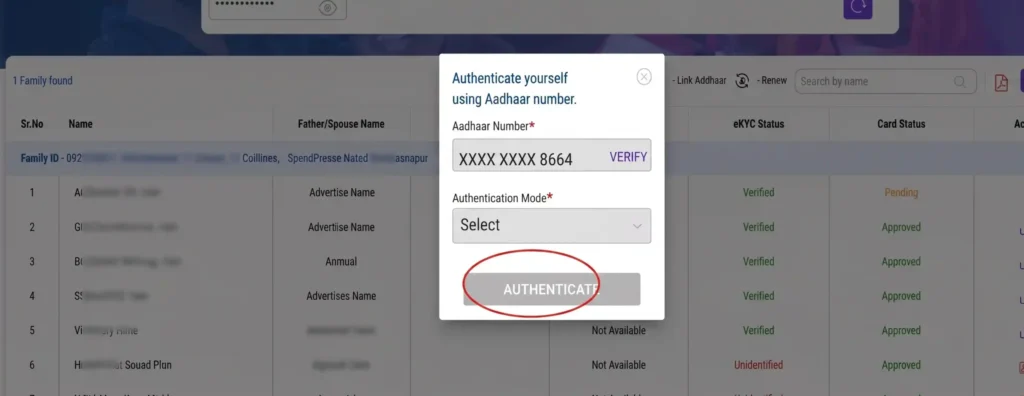
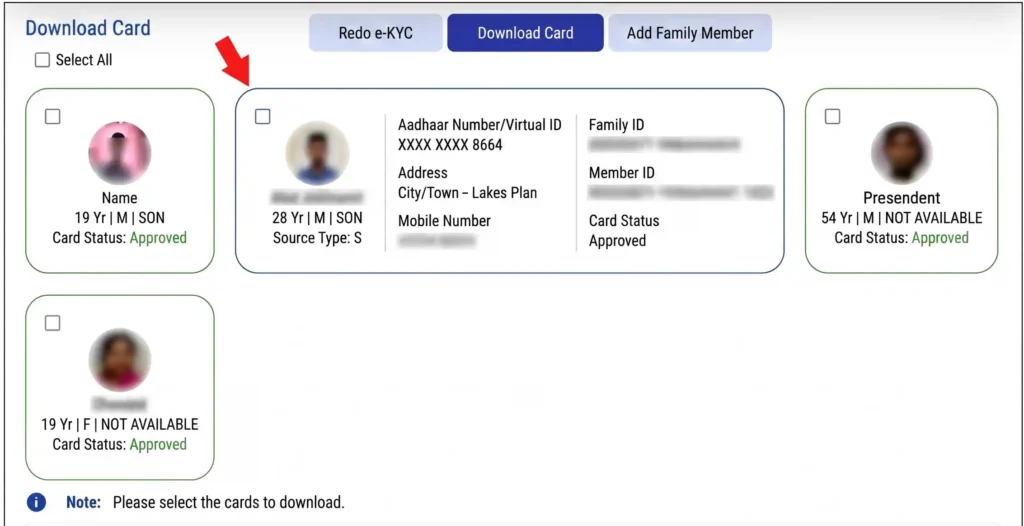
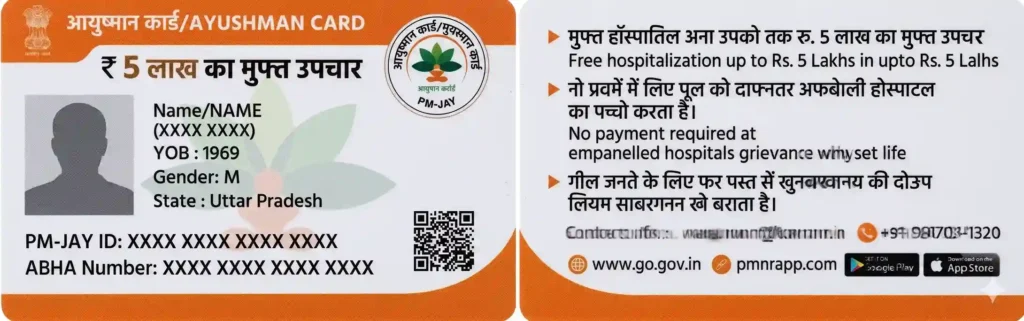
Note: If you want to read this detailed guide in Hindi, click here >> ( Ayushman Card in Hindi )
What is Ayushman Card 2026?
The Ayushman Card covers secondary and tertiary hospital care across India. Secondary care means standard surgeries that need a hospital stay. Tertiary care covers complex procedures like open-heart surgery, cancer treatment, and brain operations. In 2026, PM-JAY now includes all senior citizens aged 70 and above. This expansion is called the Ayushman Vaya Vandana Card. Every eligible senior gets a separate ₹5 lakh cover just for themselves. This extra amount does not reduce the family’s existing ₹5 lakh limit. Eligibility depends on the SECC 2011 database or a valid NFSA Ration Card. You can check your name on the Beneficiary Portal at beneficiary.nha.gov.in. The Ayushman App also lets you verify using Aadhaar-based e-KYC from your phone.
Some of the program highlights include :
Huge Benefits of Ayushman Bharat Health Card 2026
Hospital bills in India push lakhs of families into debt every year. One emergency surgery can wipe out a decade of savings. The Ayushman Card stops this from happening. It is not just a plastic card. It is a written promise from the Government of India for quality treatment at zero cost.
The card pays for 3 days of expenses before your admission. It also covers 15 days of costs after your discharge.
This means your blood tests, consultations, and medicines around the hospital stay are free. Private health insurance often limits family size or rejects pre-existing conditions. PM-JAY has none of these restrictions. Every member of your family, from newborn to grandparent, gets equal access to the full ₹5 lakh cover. According to the World Health Organisation (WHO), over 55 million Indians fall into poverty each year due to medical costs. The Ayushman Card directly addresses this crisis. It is the single largest step India has taken toward Universal Health Coverage (UHC).
Digital Healthcare Ecosystem
The Ayushman Card now connects with the Ayushman Bharat Digital Mission (ABDM). When you link your card with an ABHA ID (Ayushman Bharat Health Account), your medical records go digital. Doctors at empanelled hospitals can view your prescriptions, test reports, and health history instantly. This saves critical time during emergencies. In 2026, the registration process is faster than before. The “Aapke Dwar Ayushman” campaign now uses face-authentication technology. You open your phone camera, and the system matches your face with your Aadhaar photo. If it matches, your digital card arrives in minutes. No need to visit a CSC or wait for weeks.
The Vaya Vandana expansion makes sure even seniors with private health insurance can still apply. Having both gives them stronger protection. PM-JAY covers pre-existing conditions from day one. Most private plans make you wait 2 to 4 years for the same coverage. This makes the Ayushman Bharat ecosystem the most inclusive public health program in the world.
Statics of 2025
Financial Safety Net for Your Family
Every eligible family receives ₹5 lakh in health coverage per year. This amount resets on 1st April of each financial year. Unused balance does not carry forward. A fresh ₹5 lakh becomes available automatically. The cover protects every family member equally. Father, mother, children, and grandparents all share this pool. There is no cap on family size. A family of 3 gets ₹5 lakh. A family of 14 also gets ₹5 lakh. The Government of India designed this rule to match how Indian families actually live. Joint families, single-parent homes, and multi-generational households all fit under the same cover.
Location does not matter. Whether you live in a village in Bihar or a metro city in Maharashtra, you get the same ₹5 lakh protection. Treatment at a government hospital in Lucknow costs the same to you (zero) as treatment at a private hospital in Mumbai.
Who is Eligible for the Ayushman Card 2026?
Not everyone qualifies for the Ayushman Card. The government uses data to find families who need free healthcare the most. Your eligibility depends on where you live, what work you do, and which database records your family.
Two databases decide who gets the card. The first is the Socio-Economic Caste Census (SECC 2011). The second is the National Food Security Act (NFSA) Ration Card database. If your family appears in either, you likely qualify. In 2026, the government also added new special categories like senior citizens aged 70+ and transgender persons. You can check your eligibility right now on the Beneficiary Portal. It takes less than 2 minutes.
Rural Eligibility: The D1 to D7 Categories
In villages, SECC 2011 checks for “deprivation indicators.” These are seven types of hardship. If your family matches even one, you qualify for the Ayushman Card.
- D1: You live in a one-room house with kucha walls and a kucha roof.
- D2: No adult member in your household is aged between 16 and 59.
- D3: A woman heads the household with no adult male member.
- D4: A disabled person leads the family with no able-bodied adult earning member.
- D5: Your family belongs to a Scheduled Caste (SC) or Scheduled Tribe (ST).
- D6: You are a landless labourer and earn mainly through manual casual work.
- D7: Your family has no shelter, survives on alms, or is destitute.
Three special groups get automatic inclusion: manual scavengers, Particularly Vulnerable Tribal Groups (PVTGs), and legally released bonded labourers. No deprivation score is checked for them.
Urban Eligibility: 11 Occupational Categories
In cities, the government checks your occupation. SECC 2011 identifies 11 worker groups who face high health risks but lack employer-provided insurance.
- Ragpickers and waste management workers.
- Street vendors, cobblers, and hawkers.
- Domestic workers: cooks, cleaners, and household helpers.
- Construction workers, plumbers, masons, and painters.
- Transport workers: auto/taxi drivers, bus conductors, and cart pullers.
These workers rarely get health benefits from employers. The Ayushman Card fills that gap. They receive the exact same ₹5 lakh family cover under PM-JAY.
How to check Ayushman card Eligibility 2026?
You can verify your name in the PM-JAY beneficiary list in under 2 minutes by the following method :
If your name does not appear, try searching by Ration Card number instead of name. Spelling mistakes in SECC records are very common. Names like “Ramesh” may appear as “Rameshh” or “Rames” in the database. Still not found? Visit your nearest Common Service Centre (CSC) for manual verification. You can also call the PM-JAY toll-free helpline at 14555 (available 24 hours, 7 days a week).
Pro Tip: If you are eligible but your mobile number is not linked with Aadhaar, use the fingerprint method at a CSC. You do not need OTP for biometric verification.
Aadhaar-Linked Verification Process
Most states now link Ayushman card eligibility to your Ration Card. If you hold an active Antyodaya Anna Yojana (AAY) card or a Priority Household (PHH) card, you qualify automatically. The system uses Aadhaar-linked verification to confirm your identity. When you apply, the portal matches your Aadhaar number against the SECC or NFSA database. If the records match, you move to e-KYC. This is the final approval step before NHA issues your card.
Three e-KYC verification methods are available:
- Aadhaar OTP: Enter the code sent to your Aadhaar-linked mobile number. Work from home.
- Fingerprint scan: use a biometric device at a CSC or an empanelled hospital.
- Iris scan: available at select centres for people whose fingerprints are worn or unclear.
This digital process removes agents and brokers completely. No middleman. No fees. You verify yourself and receive the card directly from NHA.
8 Official Ways to Download the Ayushman Card
Once eligibility is confirmed, download your card through these verified channels only:
Pro Tip: Never pay anyone to “generate” your card online. The Ayushman Card is 100% free. If any website or agent asks for money, report it to the fraud helpline at 14555.
How to Apply for Ayushman Card Online 2026?
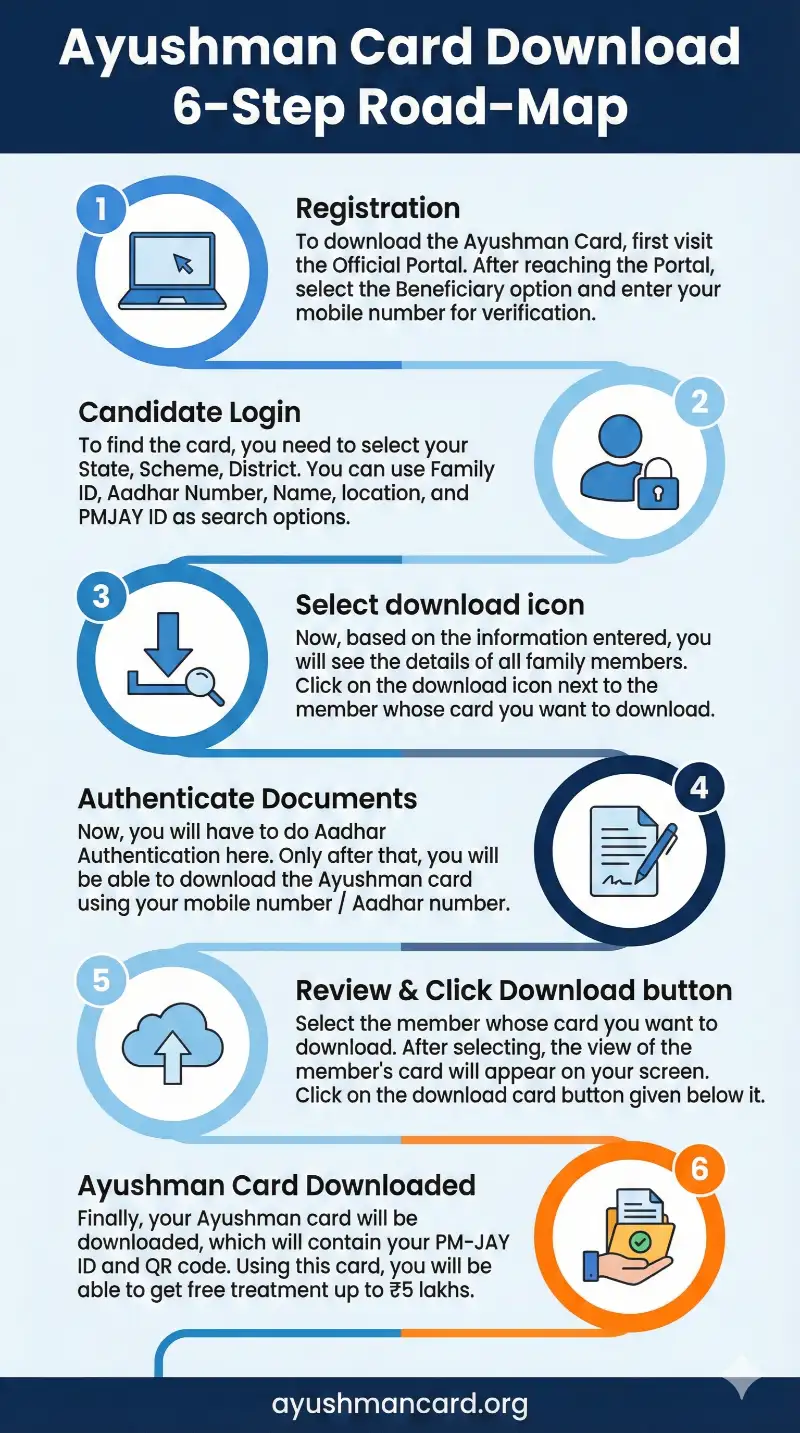
Ayushman card online apply for your health shield is now faster than ever. The National Health Authority has simplified the digital path. You can complete the process from your home using a smartphone. The system uses BIS 2.0 technology to ensure a smooth experience.
Self-Registration via Ayushman App
The Ayushman App is the official mobile tool for beneficiaries. It is available on the Google Play Store. This app is designed for easy navigation, even for first-time users.
- Login: Open the app and select the “Beneficiary” option.
- Authentication: Enter your mobile number and verify it with the OTP sent to you.
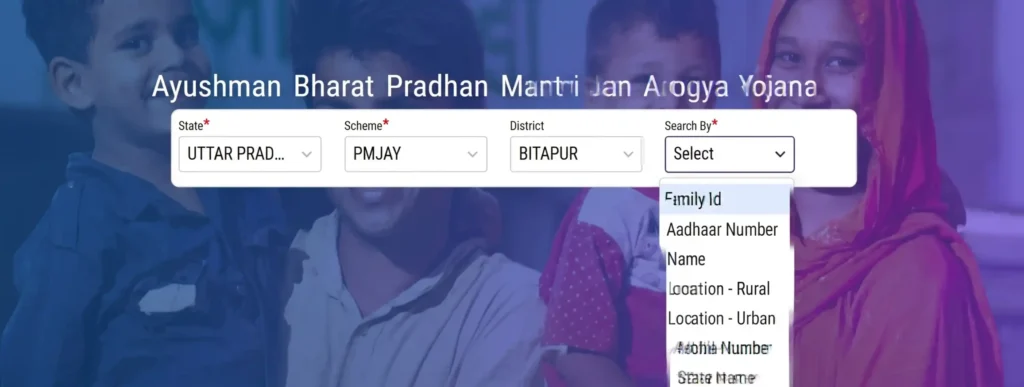
- Search: Choose your State and the scheme (PM-JAY). Search for your family using your Aadhaar number or Ration Card (NFSA) ID.
- Identification: If your name appears, you will see a “Do e-KYC” button.
- Face Authentication: The app now supports Face RD (Registration Device) services. You look into the camera. The system matches your live face with your Aadhaar photo.
- Submission: Once the matching score is high, your application is approved instantly.
Using the Beneficiary Portal
If you prefer using a computer, the Beneficiary Portal (beneficiary.nha.gov.in) is the best choice. This portal is the web version of the BIS 2.0 system. The portal allows you to track the status of your application in real-time. Usually, the “Pending” status changes to “Approved” within 24 hours.
- Visit the official site and log in as a “Beneficiary.”
- Provide your mobile number and use the Aadhaar OTP for secure entry.
- Select your district and village or town.
- The list of family members will appear on your screen.
- Click on the “e-KYC” icon for the member you want to register.
- You can choose between Fingerprint, Iris scan, or OTP. Most users find the Aadhaar OTP the most convenient.
- Upload a current passport-size photo if prompted.
Offline Mode: CSCs and UTIITSL Centres
Not everyone is comfortable with mobile apps. For manual help, visit a Common Service Centre (CSC). These centres are located in almost every Gram Panchayat. You can also go to UTIITSL Centres or dedicated kiosks at empanelled hospitals. Mention that you need an “Ayushman Card e-KYC” service. Carry your original Aadhaar card and your Ration Card. An operator will take your fingerprints on a biometric scanner. They handle the technical upload for you. A small fee may apply for the PVC card printing, but the registration is free.
State-Wise Empanelled Hospital List 2026
The Ayushman Card works at 29,847 empanelled hospitals across India. This includes over 17,000 private hospitals and 12,000+ government hospitals. Every state and union territory has participating facilities. Here is the state-wise breakdown of the top 10 states by hospital count. As of 2026, Uttar Pradesh leads with the highest number of empanelled hospitals. Bihar and Madhya Pradesh follow closely. Even in Delhi NCR, where private hospital costs are the highest in India, 678 hospitals accept the Ayushman Card.
| State | Hospitals | Private | Government |
|---|
| Uttar Pradesh | 8,924 | 5,800 | 3,124 |
| Maharashtra | 3,956 | 2,900 | 1,056 |
| Bihar | 3,487 | 2,100 | 1,387 |
| Madhy Prdesh | 3,489 | 2,300 | 1,189 |
| Rajasthn | 3,211 | 2,000 | 1,211 |
| Gujarat | 2,987 | 2,100 | 887 |
| Tamil Nadu | 2,456 | 1,900 | 556 |
| Karnataka | 2,789 | 2,200 | 589 |
| West Bengal | 2,345 | 1,600 | 745 |
| Delhi NCR | 678 | 550 | 128 |
How to Find Your Nearest Empanelled Hospital?
You can search for PM-JAY hospitals near your location in under a minute. Also, you can search through the Ayushman App. Open the app, tap “Find Hospital,” and allow location access. The app shows empanelled hospitals sorted by distance from your current location.
- Open the hospital search tool at hospitals.pmjay.gov.in.
- Select your District.
- Select the medical speciality you need (e.g., Cardiology, Orthopaedics, Oncology).
- Select your State from the dropdown.
- Choose the hospital type: Government, Private, or Both.
- The tool shows a list of hospitals with names, addresses, and contact numbers.
Major Packages & Updates of Ayushman Card 2026
The Ayushman Card covers 1,953 medical and surgical packages under NHA’s Health Benefit Packages (HBP 2.2). These packages cover nearly every major disease and procedure that requires hospitalisation. Here is a breakdown by medical speciality.
Newly included packages in 2026 :
What Else Is Included in Every Package?
Every hospital package under PM-JAY covers more than just the surgery or procedure. Here is what you get at zero extra cost:
- All medicines prescribed during your hospital stay.
- All diagnostic tests (blood work, X-rays, MRI, CT scans) ordered by your doctor.
- Food and bed charges for the entire admission period.
- Expenses from 3 days before admission (pre-hospitalisation consultations and tests).
- Expenses up to 15 days after discharge (follow-up medicines and checkups).
- Chronic diseases and pre-existing conditions are covered from Day 1. No waiting period.
The ₹5 lakh amount is a floating cover. The entire family shares this pool. It resets every financial year on 1st April.
12 Biggest Updates of 2026
Here are the latest changes to PM-JAY that every beneficiary should know:
Ayushman Vaya Vandana Card 2026
On 29 October 2024, the Government of India expanded PM-JAY to cover every Indian citizen aged 70 and above. This expansion is called the Ayushman Vaya Vandana Card. PM Modi announced this on the birth anniversary of Sardar Vallabhbhai Patel. This is not limited to poor families. Every senior citizen aged 70+, regardless of income, qualifies for this card. Even retired government officers, business owners, and professionals can apply. The key advantage of this card is network size. CGHS works at around 2,000 hospitals. ECHS covers about 3,000 hospitals. The Ayushman network includes over 17,000 private hospitals and 12,000+ government hospitals. More hospitals mean more choices for specialised care closer to home.
Differences Between PM-JAY and Vaya Vandana
| Seniors get an additional ₹5 lakh (total ₹10 lakh for family) | Standard PM-JAY | Vaya Vandana (70+) |
|---|---|---|
| Eligibility | Based on SECC 2011 or NFSA Ration Card | Only age requirement: 70+ years |
| Cover Amount | ₹5 lakh shared by full family | ₹5 lakh extra, dedicated to seniors only |
| Income Limit | Only low-income families | No income limit, open to all |
| If the family already has PM-JAY | ₹5 lakh for family | Seniors get additional ₹5 lakh (total ₹10 lakh for family) |
| Sharing Rule | All members share ₹5 lakh | Two seniors (e.g., husband-wife 70+) share their ₹5 lakh top-up |
What Does the ₹5 Lakh Cover? Diseases and Surgical Packages 2026
The Ayushman Card provides a comprehensive financial safety net. It covers almost all secondary and tertiary care procedures. The government has defined specific Health Benefit Packages (HBP) to ensure transparency. You get a fixed cover of ₹5 Lakh per family every year.
Pre-Hospitalisation and Post-Hospitalisation Expenses
Medical costs do not start or end at the hospital gate. This scheme understands that reality. It covers medical expenses for up to 3 days before you are admitted. This includes consultations and various diagnostic tests. After discharge, the support continues for 15 days. The scheme pays for your medicines and follow-up checkups during this period. This ensures your recovery is complete without extra financial stress.
Major Coverages: Cardiology, Oncology, and Nephrology
The scheme focuses on life-threatening conditions. It includes over 1,900 medical and surgical packages.
- Cardiology: Stent placements, bypass surgeries, and valve replacements are fully covered.
- Oncology: You can access chemotherapy, radiotherapy, and surgical oncology for various cancers.
- Nephrology: Dialysis services are a core part of the scheme for kidney patients.
- Other Surgeries: It also covers neurosurgery, orthopaedics (like hip replacements), and pediatric surgery.
The Exclusion List 2026
While the list of inclusions is vast, some items are excluded.
- OPD Services: Routine visits to a doctor’s clinic are generally not covered. The scheme requires at least a 24-hour hospitalisation or a specific daycare procedure.
- Cosmetic Surgery: Procedures like plastic surgery for beautification are excluded.
- Fertility Treatments: IVF and other fertility-related procedures are not part of the package.
- Drug/Alcohol Rehab: Expenses for substance abuse treatments are not covered.
- Organ Transplants: While some related costs are covered, the full transplant process has specific limitations.
Common Problems & Solutions 2026
Sometimes it blocks your progress. As health experts, we understand these hurdles. Here is how you can fix the most common problems.
Name Not in List: What to Do?
Many people search the P.M.J.A.Y Beneficiary Portal and find no results. This happens because the system relies on the SECC 2011 or NFSA records. First, try searching by your Ration Card number instead of your name. Spelling mistakes in the database are common. If your name is still missing, check your eligibility at a Common Service Centre (CSC). If you belong to a vulnerable group but are not listed, you can submit a grievance. Use the official CGRMS portal (Grievance Redressal Management System) to request an inclusion.
Mobile Number Not Linked with Aadhaar
The e-KYC process requires an Aadhaar OTP. If your current mobile number is not linked, you cannot receive this code. You have two solutions. First, visit an Aadhaar Seva Kendra to update your mobile number. This usually takes 24 to 48 hours. If you need the card urgently, use the biometric authentication method. Visit an empanelled hospital or a CSC. They use fingerprint or iris scanners. These tools do not require an OTP to verify your identity.
How to Add a New Family Member?
You can add family members to an existing Ayushman Card account. This is common for newborns or new brides.
- Log in to the Beneficiary Portal or app.
- Select the “Add Member” option next to your family record.
- You must provide a valid document for the new member. For a child, a Birth Certificate is required. For a spouse, a Marriage Certificate is necessary.
- The system will perform Aadhaar e-KYC for the new member.
- Once the State Health Agency (SHA) verifies the documents, the card becomes active.
- Then make sure to check the Ayushman card status list.
Correcting Errors on Your Card
Sometimes your age or name appears incorrectly on the printed card. This happens due to old records in the Ration Card database. You can fix this by redoing your e-KYC. The system will then fetch the updated and correct data from your Aadhaar profile. Always ensure your Aadhaar details are current before starting this process.
Myths vs Facts
Myths | Facts |
|---|---|
Only BPL cardholders qualify | A BPL card is not required. Eligibility is determined based on SECC. |
You have to pay to generate the card. | It’s completely free. |
Only government hospitals accept it. | 27,000+ private hospitals also accept it. |
Only 5 people in a family qualify. | Family size is unlimited. |
It is necessary to update the ration card. | It is not necessary for all states. |
Researcher of Ayushman Card 2026
Mohit Bhattacharya
My name is Mohit. I am a digital researcher, content strategist, and public welfare writer. I create detailed guides about government health schemes and online beneficiary services. I am known for explaining information related to Ayushman Bharat Pradhan Mantri Jan Arogya Yojana (PM-JAY) in a simple and practical way. My work is mainly for people who want to understand topics like the Ayushman Card, eligibility check, beneficiary portal login, hospital list, and the online application process.
Professional Background
I have worked for several years on digital information platforms. My focus has been on government welfare schemes, health insurance programs, and online citizen services. My goal is to provide accurate and updated information so that people can fully benefit from government schemes.
My main research focus is the Ayushman Bharat scheme, which is one of the largest public health insurance programs in India. Under this scheme, eligible families can get cashless hospital treatment of up to ₹5 lakh. It covers both secondary and tertiary healthcare. I ( Mohit ) study official portals, policy documents, and healthcare resources, then create simplified guides for users.
Expertise Areas
My content is designed so that even first-time users can easily follow step-by-step instructions. Articles I have mainly covered are:
- Ayushman Card online application process
- PMJAY beneficiary portal login guide
- Ayushman Card eligibility criteria
- Ayushman Card status check
- Hospital list and treatment coverage
- Government health scheme awareness
Mission
My mission is simple: to make government health schemes easy to understand for everyone. Many people miss out on benefits because they lack the right information. I aim to share accurate and updated details through digital platforms so more people can benefit.
Content Philosophy
My goal is not just to provide information, but to help people actually get real benefits. I follow three main principles in this content:
- Accuracy: Based on official sources and policy information
- Clarity: Simple and practical explanations
- Accessibility: Easy-to-follow guides, even for mobile users
Editorial Standards
This approach ensures that readers get reliable and practical information. Before publishing, my articles go through strict checks:
- Reference to official government sources
- Updated scheme rules and eligibility verification
- Clear step-by-step instructions
- Content structure based on user needs
Editorial Standards
I continue to create helpful content so people can easily understand and use government health services. I work as the primary author and researcher at AyushmanCard.org. My focus includes:
- Ayushman Bharat scheme awareness
- Beneficiary portal guidance